Cooking techniques
Keep dry and cooked grain quantities separate
Created with AI. Publication may be automated. About our content and editorial process
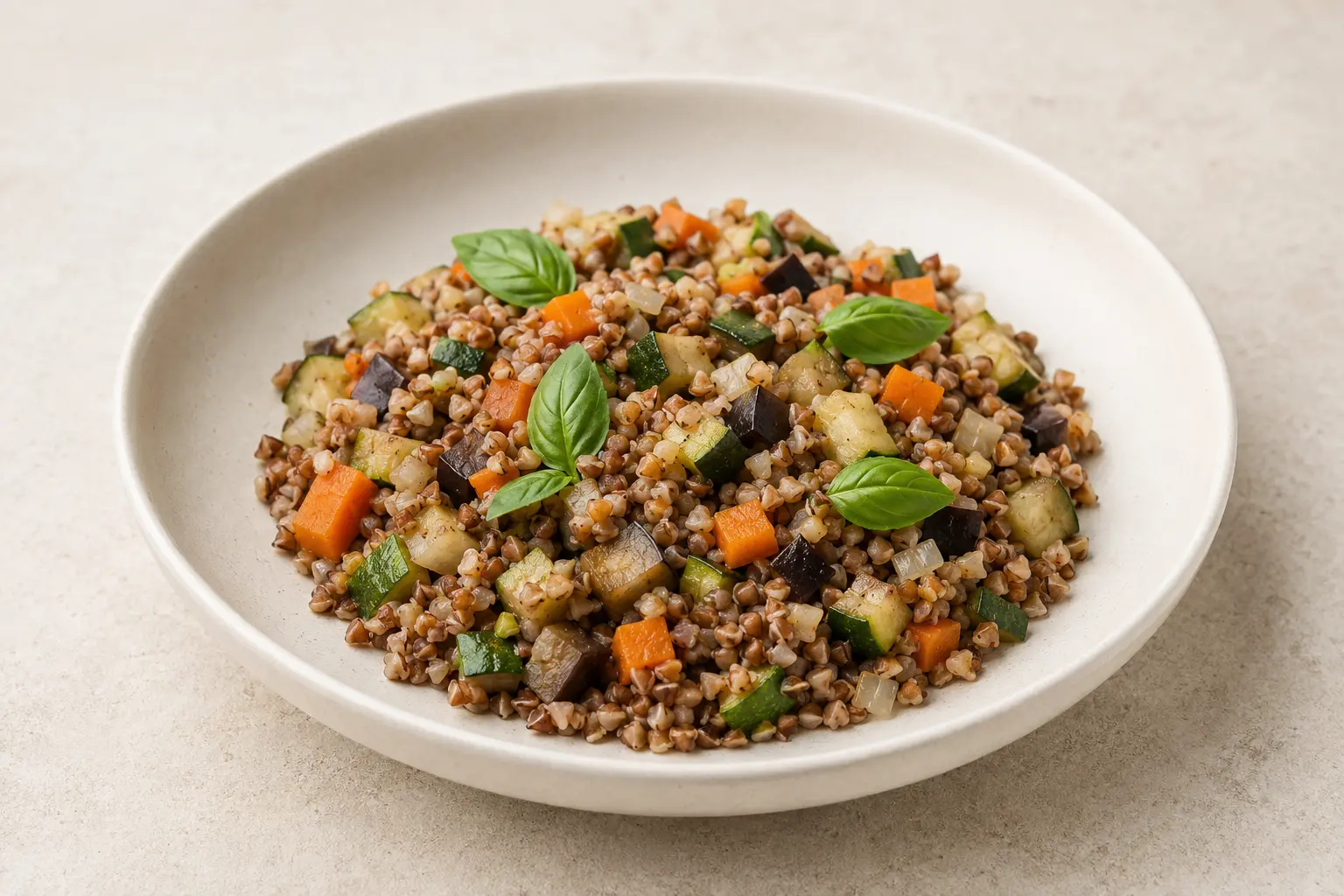
AI-generated serving illustration. About the images
Buckwheat risotto, buckwheat with mushrooms, and a rice dish may appear to use comparable quantities. The important question is whether those quantities describe dry grain or a cooked product. Check that basis before shopping, adjusting servings, or entering nutrition data.
What matters in the kitchen
Cooking adds water, so the finished mixture’s weight is not the same as the dry ingredient weight. Vegetables, sauce, and oil change the final weight too. Avoid a universal conversion when you need a traceable yield for one specific dish.
Putting it into practice
For a trial batch, weigh the actual raw ingredients and then the finished batch. Divide finished weight by the planned number of comparable servings. Retain the ingredient quantities per batch alongside that result. This documents both purchasing and plating without mixing two different weight bases.
Recipes to explore
Nutrition comes from the original cards and has not been recalculated after regional product substitutions. Articles do not replace individual nutrition or food-safety review.